Why Some Places Just Won't Let You Go: The Geography Behind America's Most Obsessive Destinations
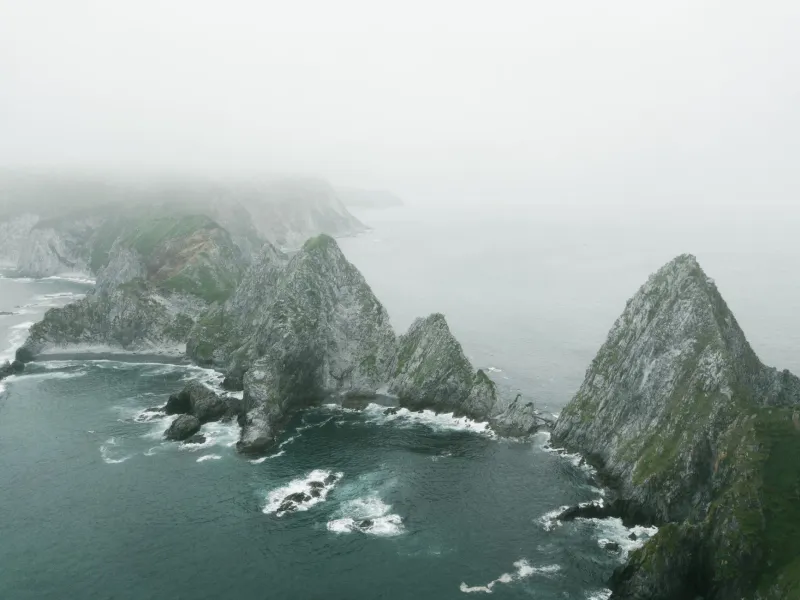
I've been to New Orleans four times. I've been to Las Vegas twice and have no particular desire to go back. I've stood at the rim of the Grand Canyon, felt the appropriate awe, taken the photos, and found that the image in my memory fades faster than I'd expect from something that massive and ancient. But coastal Maine — the rocky shoreline north of Portland, the fog-shrouded islands, the way the Atlantic smells different there than anywhere else — pulls at something I can't fully articulate, and I've returned more times than I can easily count.
I've talked to enough travelers to know this pattern is nearly universal. Everyone has places that become obsessions and places that remain pleasant memories. And for a long time, I assumed the difference was purely personal — some ineffable chemistry between traveler and destination.
But the more time I've spent with maps, the more I've come to believe that geography itself is doing a lot of the heavy lifting. The shape of a place — its topography, its relationship to water, its position relative to other regions — creates conditions that certain kinds of travelers find genuinely irresistible, and those conditions show up clearly on a map if you know what to look for.
The Water Edge Effect
Look at a list of America's most obsessively revisited destinations and you'll notice something immediately: water is almost always involved. The Oregon Coast. The Florida Keys. The Great Lakes shoreline. Sedona sits near Oak Creek. Asheville is threaded through with rivers. Even the desert Southwest, which seems like an exception, draws travelers to slot canyons carved by water, and to the Colorado River's improbable green corridor through all that red rock.
This isn't coincidence, and it's not just about scenery. Geographers and psychologists have written extensively about what's sometimes called the "blue space" effect — the measurable psychological response humans have to proximity to water. But beyond the science, there's something cartographically interesting happening at water edges: they create boundaries.
A coastline, a riverbank, a lakeshore — these are places where one kind of geography ends and another begins. Maps render this as a line, and that line is one of the most visually compelling elements in cartography. When you stand at that line in person, you feel it. You're at an edge. You can look in one direction and see everything you came from; look the other way and see something entirely different.
Edges are interesting. They're where things happen. And places that sit on geographic edges tend to generate a particular kind of emotional intensity that flat, landlocked destinations rarely match.
Why Enclosed Spaces Pull Harder Than Open Ones
Not all obsessive destinations are coasts. Some of the most magnetically revisited American places are enclosed — valleys, hollows, island communities, mountain towns tucked into gaps in the range.
Asheville, North Carolina is a perfect example. Nestled in a bowl formed by the Blue Ridge and the Black Mountains, it's geographically contained in a way that most American cities aren't. You drive through mountains to get there, and when you arrive, the mountains are still around you. The city has edges you can see from its center. That enclosure creates a specific psychological texture — a sense of being held, of being somewhere distinct from everywhere else.
Moab, Utah works the same way. The Colorado River carved the canyon that contains the town, and the red rock walls that rise on either side give it an almost theatrical quality of separateness. You know when you're in Moab. The geography announces it.
Pull up a topographic map of any destination that inspires fierce loyalty and check the contour lines around the settled area. I'd bet money that many of the most obsessively revisited places show some form of natural enclosure — hills, water, canyon walls, or the protective curve of a bay. These aren't places you pass through. They're places you arrive at.
The Role of Regional Identity and Cartographic Personality
Some destinations become obsessions not because of their immediate geography but because of where they sit in relation to everything around them. They represent something — a region, a way of life, a particular strain of American culture — and visiting them feels less like going to a specific place and more like going to a distilled version of a whole idea.
New Orleans is the obvious example. It sits at the end of the Mississippi River, which means it sits at the end of a geography that stretches from Minnesota to the Gulf. Everything the river carries — cultural, historical, literal — ends up there. The city's position on the map is almost mythological: the bottom of the country, below sea level, surrounded by water on three sides, pointing out toward the Gulf like a finger. You can feel the weight of that position when you're there.
Savannah, Georgia has a similar quality. Walk the grid of its famous squares and you're walking a map — the city was literally designed as a series of planned neighborhoods radiating from public green spaces, and that design is visible at street level in a way that most American city plans aren't. Savannah feels intentional in a way that generates deep affection in certain travelers.
The destinations that become lifelong loves are often the ones that feel like they couldn't exist anywhere else. Their geography is specific, not generic. You can point to them on a map and say: this place is here because of this river, this mountain, this particular stretch of coast — and the reason feels inevitable.
What One-Time Destinations Have in Common
It's worth being honest about the other side of this. Some extraordinary places don't inspire repeat visits, and that's not a failure of the destination.
The Grand Canyon is almost too much. Its scale overwhelms the human capacity to integrate it into a personal geography — it's not a place you can feel inside of in the way that creates attachment. You witness it; you don't inhabit it. The same is true of many of America's grandest landscapes. Denali, Niagara Falls, the Bonneville Salt Flats — these are places that exist at a register beyond the personal, and while they're worth seeing, they don't tend to generate the recurring pull that smaller, more intimate geographies do.
Las Vegas, for all its engineered allure, sits in a flat desert basin with no natural water feature, no enclosure, and no regional identity it didn't manufacture itself. It's a place designed to be experienced and departed. The map of Las Vegas is a grid of streets surrounded by undifferentiated desert, and that flatness — geographic and cartographic — is part of why it doesn't tend to become an obsession for most travelers.
Reading Your Own Desires in the Map
Here's the exercise I keep coming back to: pull up a map of a place you've returned to more than twice. Look at it not as a navigation tool but as a portrait. What's the water situation? What does the topography look like — is the place enclosed, elevated, at an edge? Where does it sit in relation to the larger region around it?
I'd guess that the map will show you something you already know in your body but haven't quite articulated: why that particular arrangement of land and water keeps calling you back. Geography isn't destiny, but it creates conditions. And some conditions, for some travelers, feel less like a location and more like a home they didn't know they were looking for.